

Turkish hair transplant in the USA.
A Turkish hair transplant is a high-density FUE hair transplant performed with the techniques, planning style and artistry developed in Turkey's high-volume clinics. At HAIROCKET it is performed in South Florida by Turkish-trained, Florida-licensed surgeons — no 10-hour flight, no recovery abroad, no guessing who is holding the instruments.
- IstanbulWhere our surgeons trained
- FloridaWhere they're licensed
- 0International flights needed
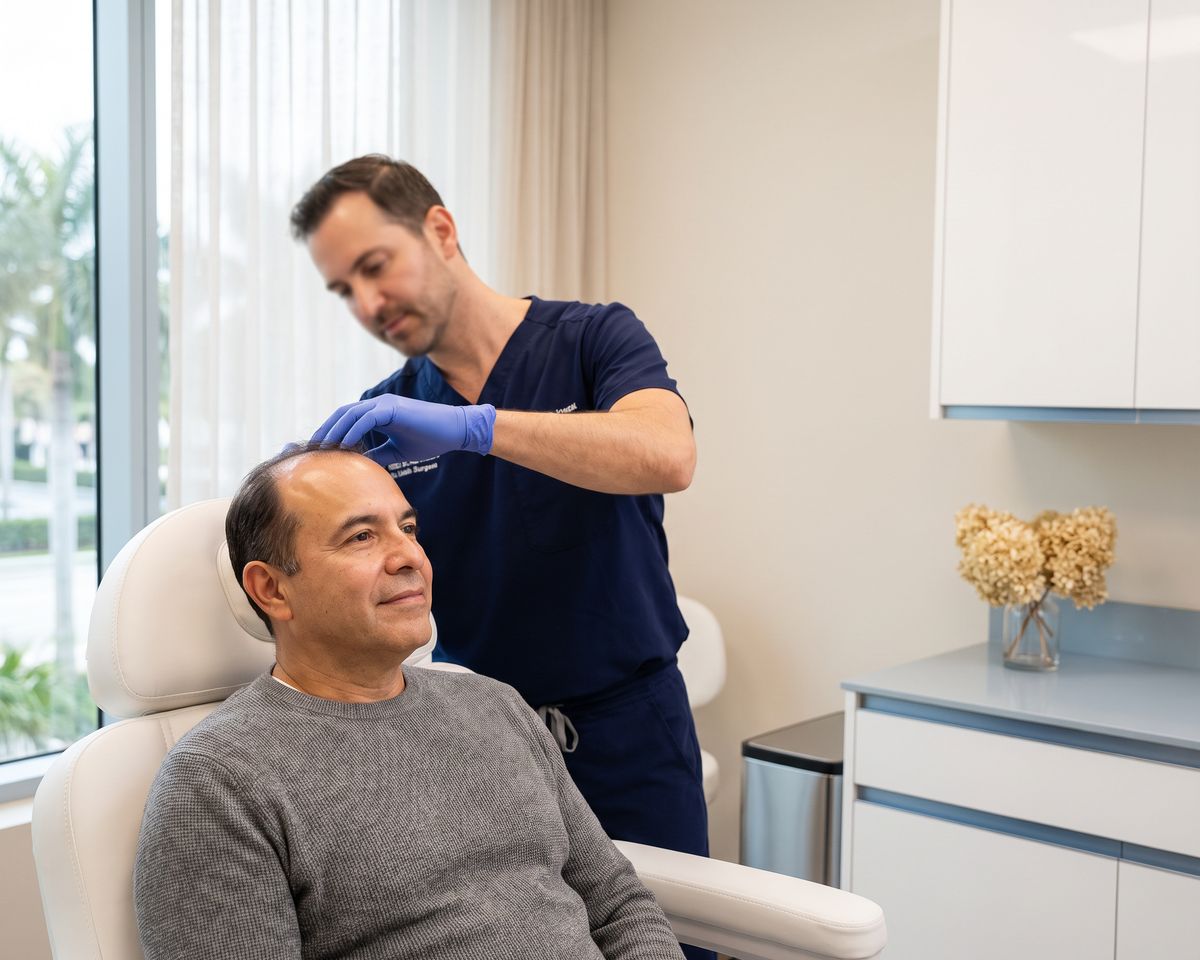
What is a Turkish hair transplant?
A Turkish hair transplant isn't a single technique. It's an approach to hair restoration that developed in Turkey over the last fifteen years, as Istanbul clinics began treating more patients than anywhere else in the world. That volume pushed Turkish surgeons to refine follicular unit extraction (FUE), popularize sapphire-blade channel opening, perfect direct hair implantation (DHI) with Choi implanter pens and make dense, single-session results the norm.
Today, when patients search for a Turkish hair transplant, they usually mean three things: high graft counts in one session, a natural, carefully designed hairline, and an all-inclusive price. HAIROCKET delivers all three — in South Florida.
Why Turkey became the hair transplant capital
Several factors came together: a large pool of doctors and technicians who specialized exclusively in hair, very high patient volumes, competitive pricing that attracted medical tourists from Europe, the Middle East and North America, and a culture of continuous technique refinement. Surgeons who work in that environment see thousands of scalps — every hair type, every pattern of loss, every kind of donor area.
What "Turkish technique" looks like in practice
- Sapphire FUE: micro-channels opened with sapphire blades instead of steel, for finer incisions and denser placement.
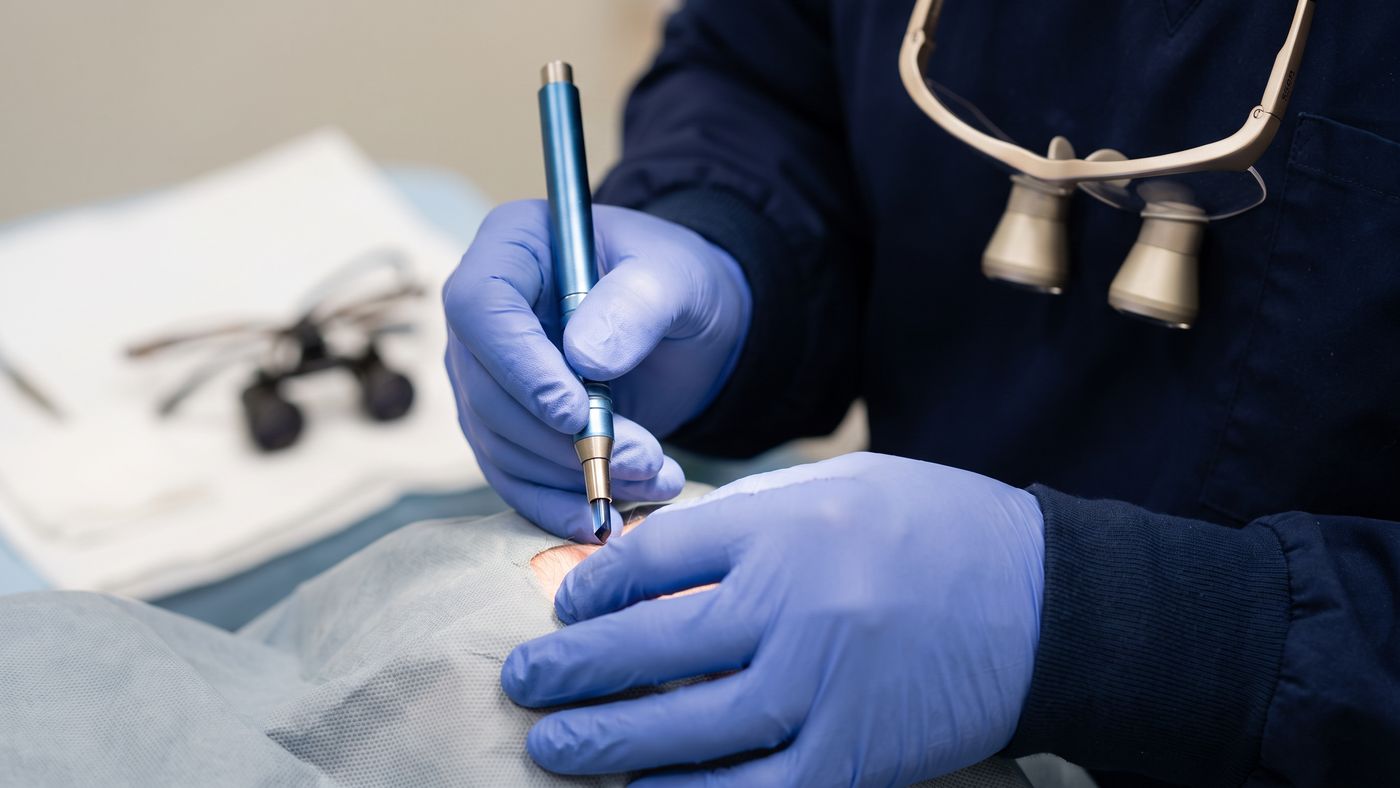
- DHI: grafts implanted directly with a Choi pen, giving precise control over angle, depth and direction.
- Unshaven FUE: extraction and implantation without shaving the whole head — popular with professionals and women.
- Large single sessions: careful planning that allows 3,000–4,000+ grafts in one day when the donor area allows it.
Why get a Turkish hair transplant in the USA instead of Turkey?
For years, the only way to get a Turkish hair transplant was to fly to Istanbul. Hundreds of thousands of Americans did exactly that. Many were happy with their results — but the model has real drawbacks, and they have grown more serious over time.
No long-haul flight
A 10–12 hour flight each way, days after surgery, increases swelling and makes the first wash and graft care harder.
Surgeon accountability
In the U.S., the surgeon who operates is a licensed physician answerable to the Florida Board of Medicine.
Real follow-up
Month-3, 6 and 12 reviews in person or by video — with the same team, in your time zone.
Fewer unknowns
No uncertainty about whether a technician or a doctor performs the critical steps.
No language barrier
Consultations, consent and aftercare in English or Spanish.
Clear pricing
One written, all-inclusive quote — no add-ons at the clinic, no currency surprises.
The rise of "black market" hair clinics
The International Society of Hair Restoration Surgery (ISHRS) has repeatedly warned about unlicensed hair transplant operations worldwide, where technicians — not physicians — perform surgery. In its 2025 practice census, a majority of member surgeons reported black-market clinics operating in their own cities. Turkey's Ministry of Health has closed many illegal clinics, but the risk remains for patients who can't verify credentials from abroad.
Turkey has many excellent, ethical surgeons. The problem is not Turkish expertise — it's how hard it is to verify who will actually perform your procedure from thousands of miles away. Bringing that expertise to a Florida-licensed practice removes the guesswork.
Turkish-trained, Florida-licensed hair transplant surgeons
Every HAIROCKET surgeon trained in high-volume hair restoration practices in Turkey, where performing thousands of FUE procedures is the norm. Before operating in South Florida, each surgeon obtained a Florida medical license. That combination is the heart of our motto: Turkish expertise, American standards.
- Surgeon-designed hairlines for every patient
- Surgeons perform the critical steps — extraction planning, channel opening and hairline placement
- Florida medical licensure for every operating physician — your surgeon is named in your written plan, so you can verify the license with the Florida Department of Health
- English- and Spanish-speaking care team
You can read each surgeon's training, credentials and results on our surgeons page.
Turkish hair transplant techniques we perform in South Florida
We offer the same techniques Turkish clinics are known for, chosen by your surgeon based on your hair, your goals and your lifestyle.
| Technique | Best for | Shaving | Recovery |
|---|---|---|---|
| Sapphire FUE | Density & larger areas | Required | 3–5 days |
| Unshaven FUE | Discreet recovery | Not required | 1–2 days |
| Crown restoration | Vertex density | Required | 3–5 days |
| Female transplant | Hairline lowering | Usually not | 2–4 days |
| Beard & mustache | Facial hair | Face only | 3–5 days |
Not sure which technique is right for you? Send four photos and your surgeon will recommend one in your free analysis.
How much does a Turkish hair transplant in the USA cost?
Turkish clinics popularized the all-inclusive package. We follow the same model: one fixed price covering surgery, local anesthesia, medications, the first wash and 12 months of follow-up. HAIROCKET has three packages — Essential $5,500, Signature $5,750 or Elite $8,000 — each covering all the grafts your donor area can safely provide, with a 3-month PRP package in Signature and a 1-year PRP package plus stem cell therapy in Elite.
That's more than the headline price of a package in Istanbul, but often close to the real total once flights, hotel nights, time off work and a companion's travel are added — and it includes in-person follow-up that a trip abroad can't. See our Turkey vs USA comparison and pricing page for a full breakdown.
Your Turkish hair transplant journey — without leaving the country
- Day 0 — Free analysis: send four photos; a surgeon replies with a graft estimate and quote within 24 hours.
- Consultation: in person in Tamarac or by secure video, always with a surgeon.
- Procedure day: hairline design, needle-free anesthesia, extraction and implantation — home the same evening.
- Day 1: first wash at the clinic. Drive or fly home within 48 hours.
- Months 3–12: growth reviews in person or by video; final result at 12 months.
Patients come from across Florida — Fort Lauderdale, Boca Raton, Orlando — and from states across the Southeast. See all locations we serve.
How Turkey became the center of hair restoration
In the early 2000s, hair transplants in most countries were still performed with the strip method (FUT), which removes a band of scalp from the back of the head and leaves a linear scar. As follicular unit extraction matured, Turkish clinics adopted it early and at scale. Because FUE removes individual follicles rather than a strip, it suited the high-volume, package-based model that Istanbul clinics were building for international patients.
Over the following decade, Turkey became the destination of choice for patients from Europe, the Gulf states and, increasingly, North America. Industry estimates suggest that well over a million hair transplant procedures have been performed in Turkey for international patients. That concentration of experience created a generation of surgeons who had seen more scalps, more hair types and more complex cases than almost anyone else.
Innovation born from volume
Volume drove innovation. Turkish surgeons helped popularize sapphire blades for channel opening, which create smaller V-shaped incisions and allow tighter graft placement. They refined DHI, using Choi implanter pens to place grafts directly without pre-made channels. They developed workflows for unshaven FUE so professionals and women could return to work without visible signs of surgery. And they became expert at planning large single sessions safely — a skill that depends on reading donor density accurately.
The other side of the boom
The same boom also created problems. As demand exploded, some operations cut costs by letting technicians perform surgery with minimal physician involvement. International societies and Turkish health authorities have both acted against unlicensed clinics, but the scale of the market makes enforcement difficult. For a patient in Florida or Texas, telling a surgeon-led clinic from a technician-run one — from thousands of miles away — is genuinely hard.
What "American standards" means for your hair transplant
When we say Turkish expertise with American standards, we mean specific, verifiable protections that apply to every procedure at our Tamarac clinic.
- Licensure: every operating surgeon holds an active Florida medical license, which you can verify on the Florida Department of Health's license lookup.
- Informed consent: a written plan, graft estimate, risks and alternatives — reviewed with your surgeon in English or Spanish before surgery.
- Anesthesia safety: local anesthesia administered under physician supervision, with monitoring throughout the procedure.
- Sterility: sterile, single-use instruments and U.S. infection-control protocols.
- Privacy: your records and photos are protected under HIPAA and never used without written authorization.
- Recourse: a clinic that operates under Florida law and answers to Florida regulators.
None of this changes the technique — it changes the accountability around it. That's the point: the skill of a Turkish-trained surgeon with the safeguards American patients expect.
Who is a good candidate for a Turkish hair transplant in the USA?
The ideal candidate for any hair transplant has stable hair loss, a healthy donor area at the back and sides of the scalp, and realistic expectations. Turkish techniques are especially well suited to a few groups of patients:
- Patients who researched Turkey but don't want to travel abroad, manage recovery in a hotel or rely on remote follow-up.
- Professionals who need a discreet recovery — unshaven FUE lets you keep your length.
- Patients needing large sessions of 3,000+ grafts, where high-volume planning experience matters most.
- Women seeking hairline lowering or density without shaving.
- Patients with afro-textured or curly hair, who need a surgeon experienced with curved follicles.
If you're in the early, rapid phase of hair loss, or your donor area is limited, your surgeon may recommend medical therapy or PRP first. We'll always tell you honestly whether surgery is the right step now.
Checklist: choosing a Turkish-trained surgeon in America
Whether you choose HAIROCKET or another clinic, use this checklist to compare options fairly:
- Can I verify the surgeon's medical license in my state?
- Where did the surgeon train, and how many procedures have they performed?
- Who designs the hairline, who extracts and who places grafts?
- Can I see unedited before and after photos of patients with hair like mine?
- Is the quote all-inclusive and in writing?
- What does follow-up look like at months 3, 6 and 12?
- What happens if I'm not satisfied with growth?
A reputable clinic will answer every question clearly. If answers are vague — especially about who performs the surgery — keep looking.
Turkish hair transplant myths — and the facts
Myth: "Turkish hair transplants are only good because they're cheap."
Fact: price made Turkey popular, but skill kept it popular. The best Turkish surgeons became leaders because of the sheer number of procedures they perform and the techniques they refined along the way.
Myth: "You have to go to Istanbul to get Turkish technique."
Fact: technique travels with the surgeon. When a surgeon trained in high-volume Turkish clinics operates in South Florida, you get the same approach to planning, extraction and implantation.
Myth: "Bigger sessions are always better."
Fact: the right graft count is the one your donor area can safely support while leaving reserves for the future. Turkish training teaches large sessions — and when not to do them.
A Turkish-style procedure day in South Florida
Turkish clinics are known for a calm, well-orchestrated procedure day, and we follow the same rhythm. You arrive in the morning, review your hairline design with your surgeon and have photos taken. Needle-free local anesthesia numbs the donor area, and extraction begins. After a lunch break in our recovery lounge, channels are opened with sapphire blades, and grafts are placed. Most patients watch films, listen to music or sleep.
By late afternoon you receive your aftercare briefing, medications and kit, and head home or to your hotel. The next morning you return for your first wash. The difference from Istanbul is what comes next: instead of a long-haul flight, you drive home or take a short domestic flight — and your surgeon is still nearby.
Turkish hair transplant in the USA — FAQ
Can I get a real Turkish hair transplant in the USA?
Yes. A Turkish hair transplant refers to the techniques and approach developed in Turkey — Sapphire FUE, unshaven FUE and large single sessions. Our Turkish-trained surgeons perform these FUE techniques in South Florida under Florida licensure.
Are your surgeons actually Turkish?
Our surgeons trained and practiced in high-volume hair restoration centers in Turkey. Every surgeon who operates at HAIROCKET holds a Florida medical license; details are on each surgeon's profile.
Is it cheaper than going to Turkey?
The headline price in Turkey is lower, but once flights, hotels, time off and follow-up are included, the gap narrows considerably — and you gain in-person aftercare and U.S. accountability.
Do you offer the same techniques as Istanbul clinics?
Yes — Sapphire FUE, stem cell hair transplants, unshaven FUE, crown restoration, female, beard and eyebrow transplants.
How long do I need to stay in South Florida?
Florida patients often go home the day after surgery. Out-of-state patients usually plan three nights.
Is a Turkish hair transplant permanent?
Transplanted follicles come from a genetically resistant donor zone and keep growing for life, wherever the procedure is performed.
Do Turkish-trained surgeons in the USA use the same equipment?
Yes — sapphire blades and micro-punches are the same tools used in high-volume Istanbul clinics.
Can I bring my Turkish clinic's plan to HAIROCKET?
Yes. We're happy to review any plan or quote and give an honest second opinion.
Do you offer repairs for transplants done abroad?
Yes. Repair cases need careful donor assessment; your surgeon will explain what's possible.
Is Spanish spoken at the clinic?
Yes — our coordinators and aftercare team speak English and Spanish.
Turkish hair transplant expertise — now in America.
Turkey became the world's hair transplant capital by performing more procedures, with more refined techniques, than anywhere else. HAIROCKET brings that expertise to South Florida — Turkish-trained surgeons, licensed in Florida, working to U.S. medical standards. Same artistry. No 10-hour flight.
- Turkish-trained surgeonsYears of training in high-volume hair clinics in Istanbul.
- Florida-licensedEvery surgeon holds a Florida medical license and operates to U.S. standards.
- No flight to TurkeyConsult, operate and follow up in South Florida — a short drive or flight away.
Turkish expertise. No passport required.
Get your free analysis from a Turkish-trained, Florida-licensed surgeon.