
Short on time? Summarize with AI
Open this article in your favorite AI assistant for an instant summary.
In this article
- The first week
- How the donor area heals
- Weeks 2 to 4
- How recovery differs by type of procedure
- Months 1 to 2: shock loss
- Months 3 to 12: growth
- Supporting growth during recovery
- Recovery tips from our surgeons
- Recovery when you travel
- Travelling home after your procedure
- Sleeping after a hair transplant
- Washing: the most important habit
- Returning to normal activities
- What's normal — and when to call
- Your follow-up checkpoints
- The patience phase: months 2 to 5
- Planning your time off: an illustrative example
- Recovery mistakes to avoid
The first week
| Day | What happens | What to do |
|---|---|---|
| Night 1 | Mild tightness, some oozing | Sleep elevated, take medications |
| Day 1 | First wash at the clinic | Follow the washing technique exactly |
| Days 2–3 | Swelling may peak on the forehead | Keep sleeping elevated, cold compresses on forehead only |
| Days 4–7 | Swelling fades, small crusts | Wash twice daily, avoid touching grafts |
How the donor area heals
Most recovery advice focuses on the new hairline, but the donor area — usually the back and sides of the head — heals on its own schedule. With FUE, each graft leaves a tiny round opening that closes within a few days and forms a small scab.
Days 1 to 10
Expect mild tenderness, tightness and pinpoint scabs. If a dressing is used, it usually comes off at the day-one visit. Wash the donor area with the same gentle technique you use on the grafts; it tolerates light contact sooner than the recipient area, but it still should not be scrubbed.
Weeks 2 to 6
If the donor area was shaved, it grows back to an even length within a few weeks and usually covers the extraction sites. Some people notice patchy numbness or tingling; this typically fades gradually over weeks to a few months as small nerves recover.
The long term
Healed FUE sites leave tiny dot-like marks that are generally hidden under hair of normal length. If you like very short fades, ask your surgeon how short you can go before the marks show — it depends on your skin, hair color and how densely grafts were taken.
With unshaven FUE, the donor area is trimmed in a band hidden under longer hair, so the healing sites stay covered from the start.
Weeks 2 to 4
Crusts loosen and fall away during washing by around day ten to fourteen. Redness fades over the following weeks — faster with Sapphire FUE and consistent aftercare. Light exercise can resume after about ten days; swimming, saunas and heavy workouts after about four weeks.
How recovery differs by type of procedure
The biological timeline — healing, shedding, rest and regrowth — is the same for every FUE technique. What changes is how visible the first two weeks are and which areas need extra care.
| Plan | How visible it is | Main difference | Extra care |
|---|---|---|---|
| Shaved Sapphire FUE | Short hair and small scabs for roughly 10–14 days | The standard timeline in this guide | Loose hat from day three; protect the scalp from sun |
| Unshaven FUE | Much less visible; longer hair covers the recipient area | Grafts sit between existing long hairs | Rinse carefully so long hair doesn't tug on crusts |
| Crown restoration | Hidden from the front, visible from above | Grafts sit where you rest your head | Strict back-sleeping setup; crown results can take up to 18 months |
| Larger session (hairline plus mid-scalp) | A larger scabbed area | Forehead swelling can be more noticeable on days 2–4 | Plan a few extra days off if appearance matters at work |
| Female hair transplant | Usually discreet | Grafts placed along a part or hairline among native hair | No tight styles or extensions over the grafts until cleared |
Sapphire blades create small, precise recipient channels, which helps the area look tidy as it heals. For details on each approach, see Sapphire FUE and crown restoration.
Months 1 to 2: shock loss
Most transplanted hairs shed between weeks two and eight. This is normal: the follicle stays in place and enters a resting phase before regrowing. Some patients also notice temporary thinning of nearby native hair.
Months 3 to 12: growth
- Months 3–4: fine new hairs appear
- Month 6: visible change; roughly half the final density
- Month 9: hair thickens and matures
- Month 12: final result for most areas (crown up to 18 months)
Supporting growth during recovery
Transplanted follicles come from an area that is relatively resistant to pattern hair loss, but the native hair around them is not. Recovery is the right time to put a plan in place for both.
Medication
If your surgeon recommends medical therapy for pattern hair loss, they will tell you when to start or restart it after surgery. Don't stop, start or change a hair loss medication on your own during recovery — ask first.
PRP
PRP uses a concentrate prepared from your own blood and is often used in the months after a transplant to support native hair. Your surgeon sets the timing. The Signature package includes a 3-month PRP package, the Elite package includes a 1-year PRP package (12 sessions), and single sessions are $750.
Scalp care products
Gentle shampoo and lotion matter most in the first weeks, while crusts soften and the skin settles. Signature includes a 3-month aftercare shampoo and lotion set and Elite a 6-month set — compare them on our packages.
Everyday health
Enough sleep, a balanced diet with adequate protein and iron, not smoking and managing stress all support normal hair growth. They won't speed up the timeline, but deficiencies and smoking can work against it.
Recovery tips from our surgeons
- Sleep elevated for five nights
- Wash exactly as shown at the clinic
- Avoid sun, pools and the ocean for two weeks
- No alcohol for a week; no smoking for two weeks
- Wear a loose hat outdoors from day three
- Send photos to your care team whenever you're unsure
Read the full patient guide.
Recovery when you travel
If you travel for your procedure, recovery at home is easier than in a hotel abroad. Our patients from across Florida and the Southeast recover at home and follow up by video — see locations we serve and our Turkey vs USA guide.
Travelling home after your procedure
If you travel to South Florida for surgery, plan to leave after your day-one wash. Short flights and drives are usually comfortable: wear a loose button-up shirt and a clean cap, bring the neck pillow from your aftercare kit and avoid resting your head against the window or seat. Keep your aftercare kit and medications in your carry-on, stay hydrated and skip alcohol. Once home, follow the same washing and sleeping routine you learned at the clinic, and send photos to your care team whenever you have a question.
Sleeping after a hair transplant
For the first five nights, sleep on your back with your head elevated at about 45 degrees. A travel pillow keeps the recipient area off the pillow and reduces forehead swelling. After a week, you can return to your normal position as long as you avoid pressure on the grafts.
Washing: the most important habit
Your first wash happens at the clinic the day after surgery. After that, you'll wash once or twice a day using a gentle technique: pour diluted shampoo over the grafts, pat — don't rub — and rinse with a cup rather than direct shower pressure. By day ten, you can shower normally and gently remove any remaining crusts.
Returning to normal activities
| Activity | When |
|---|---|
| Desk work | Day 3–5 |
| Walking | Immediately |
| Light exercise | Day 10 |
| Gym & running | Week 4 |
| Swimming, sauna | Week 4 |
| Haircut (scissors) | Week 4 |
| Clippers on transplanted area | Month 3 |
| Hair dye | Week 6 |
What's normal — and when to call
- Normal: mild swelling, redness, itching, small crusts, temporary numbness, shedding in months 1–2
- Call us: increasing pain after day three, spreading redness, fever, persistent bleeding or pus
Our aftercare team answers WhatsApp photos seven days a week.
Your follow-up checkpoints
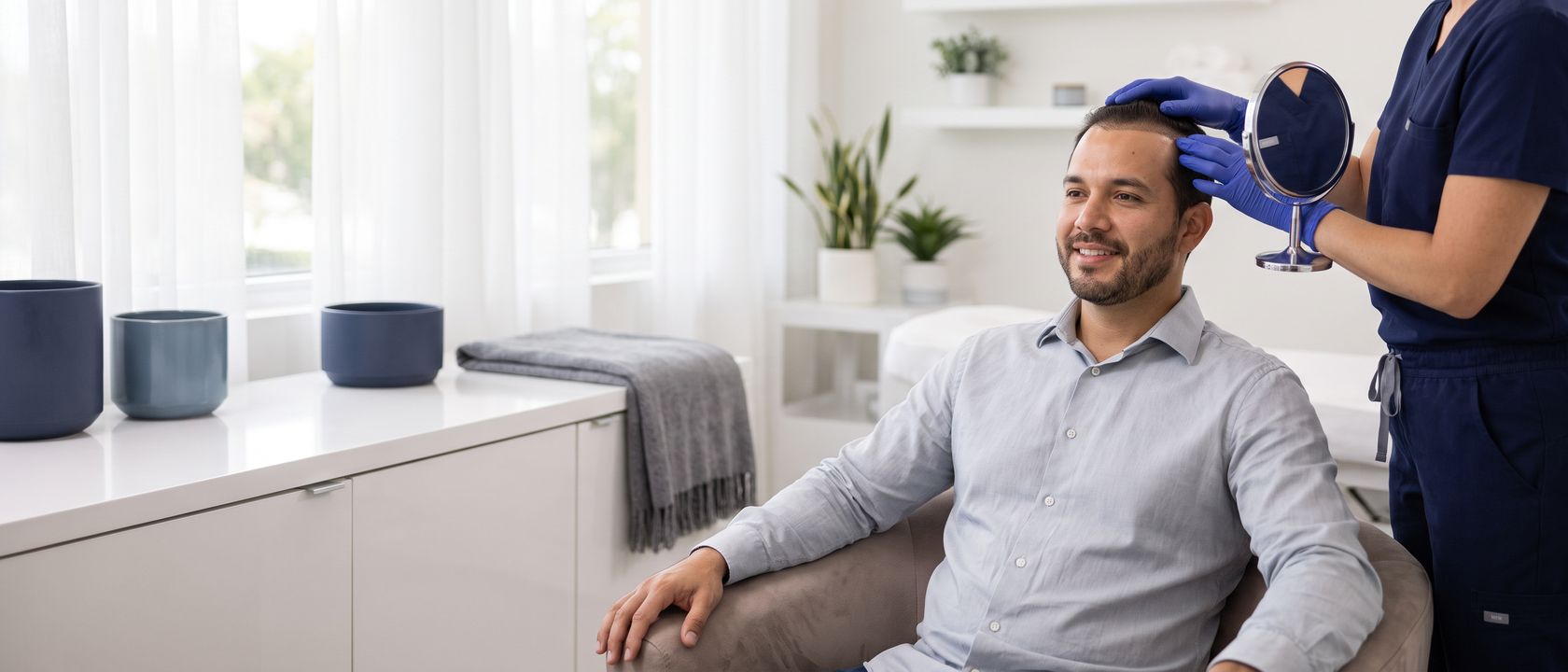
Your hair transplant recovery is reviewed at set points, so small questions get answered before they become worries. Each visit has a specific purpose.
blog-recovery-video-follow-up.jpg · 16:9
| Checkpoint | What gets reviewed | What to bring or do |
|---|---|---|
| Day 1 — first wash & check | Graft appearance, donor healing and swelling; you learn the washing technique | Questions about sleeping, medication and travel home |
| Month 3 | Whether shedding has finished and early growth has started; scalp health | Monthly photos taken in the same light and position |
| Month 6 | Density and direction of new hairs; whether native hair is stable | Notes on any medication or PRP you're using |
| Month 9 | Maturing texture and thickness; softness of the hairline | Any concerns about areas that look uneven |
| Month 12 | Final result for most areas compared with day-zero photos; long-term plan | Questions about maintenance or a future session |
If you live out of town, most checkpoints work well by video when you send clear photos beforehand. The crown can keep improving past month 12, so a later look at that area can be useful.
The patience phase: months 2 to 5
The hardest part of recovery is psychological: after shedding, the transplanted area can look similar to how it did before surgery. New hairs start fine and light, then thicken over months. Taking monthly photos in the same light helps you see progress that's hard to notice day to day.
Planning your time off: an illustrative example
Example: a 38-year-old office worker with Norwood 3 recession plans a shaved Sapphire FUE session. Here is one way the first four weeks could be organized — an illustration, not a prescription.
blog-recovery-resting-head-elevated.jpg · 16:9
- Thursday, procedure day in Tamarac: a long day under local anesthesia; someone drives them home afterward.
- Friday, first wash & check: the care team reviews the grafts and demonstrates the washing routine.
- The weekend: rest, sleep elevated, cold compresses on the forehead only, no bending or heavy lifting.
- Monday to Friday: working from home while swelling peaks and fades and small crusts form.
- Day 11: back in the office in a loose cap or with a short cut; most crusts have washed away by the end of week two.
- Week 4: gym, swimming and a scissor haircut resume.
The same person choosing unshaven FUE might return to the office sooner, because longer hair covers the recipient area. To estimate your own session size, try the graft calculator.
Recovery mistakes to avoid
Most setbacks in hair transplant recovery come from small habits, not from the surgery itself.
- Picking or scratching crusts. They come away with washing; forcing them in the first week or so can dislodge grafts.
- Aiming the shower head straight at the grafts during the first ten days.
- Wearing a tight cap, headband or helmet that presses on the hairline before your surgeon says it's fine.
- Returning to heavy lifting, hot yoga or contact sports early because you feel well — see exercise after a hair transplant.
- Getting sunburned on the recipient area in the first months; wear a hat and ask before putting sunscreen on healing skin.
- Judging the result at month four or five, when new hairs are still fine, light and uneven.
- Stopping recommended medical therapy, which can let native hair thin around the grafts.
If shedding is what worries you most, read shock loss after a hair transplant.
Frequently asked questions
When can I go back to work after a hair transplant?
Most people return to desk work in 3–5 days; unshaven FUE patients often sooner.
When can I wear a hat?
A loose, clean hat from day three.
Is shedding after a transplant normal?
Yes — shock loss in months one and two is expected.
When will I see final results?
Around month twelve, up to eighteen months for the crown.
Can I exercise after a hair transplant?
Light exercise after about ten days; full workouts after about four weeks.
When can I get a haircut?
Scissor cuts after about four weeks; clippers on the transplanted area after about three months.

HAIROCKET editorial team
Written in South Florida from the questions patients ask most in consultations, and updated when techniques, prices or guidelines change. Read our editorial policy.