

Short on time? Summarize with AI
Open this article in your favorite AI assistant for an instant summary.
In this article
- Common causes of female hair loss
- Patterns of female hair loss at a glance
- Treatment options
- When a female hair transplant helps
- Unshaven techniques for women
- Turkish expertise for women, in South Florida
- Female hair transplant cost
- Setting realistic expectations
- How female hair loss is diagnosed
- Preparing for your evaluation
- Who is a good candidate for a female hair transplant?
- Why the donor area matters more for women
- What the procedure looks like
- Hairline lowering: grafts vs surgery
- Three illustrative scenarios
- Combining treatments
- Mistakes to avoid
Common causes of female hair loss
- Female pattern hair loss: widening part, diffuse thinning on top
- Hormonal changes: pregnancy, menopause, PCOS
- Thyroid and iron deficiency
- Traction alopecia: from tight hairstyles
- Stress-related shedding (telogen effluvium)
Patterns of female hair loss at a glance
Each cause tends to leave a recognizable pattern, and the pattern points to the first step. A transplant is the right tool for only some of them.
| Pattern | What it often looks like | Usual first step | Role of a transplant |
|---|---|---|---|
| Female pattern hair loss | Widening part and thinner top; the front hairline is often preserved | Diagnosis, medical therapy, PRP | Possible for stable, localized thinning with a strong donor area |
| Telogen effluvium | Sudden diffuse shedding, often a few months after childbirth, illness, surgery or major stress | Find and correct the trigger; shedding often settles on its own | Usually none — hair typically regrows |
| Traction alopecia | Thinning at the temples and hairline from tight styles, braids or extensions | Loosen styles early; early traction loss may recover | Helpful once loss is long-standing and stable |
| Scarring alopecias | Patchy loss, sometimes with redness, itching or a receding frontal band | Specialist diagnosis, often including a scalp biopsy | Considered, if at all, only after the condition has been inactive for a long time |
| Naturally high hairline | High forehead since the teen years, with no ongoing loss | No medical treatment needed | Graft-based hairline lowering |
Patterns can overlap — pattern thinning, for example, can become more noticeable after a period of stress shedding. That is one reason female hair loss needs a diagnosis before anyone talks about graft numbers.
Treatment options
Many women respond to medical therapy and PRP, especially early on. A dermatologic assessment and blood tests help identify reversible causes before considering surgery.
When a female hair transplant helps
A female hair transplant works best for localized, stable loss: a high or uneven hairline, thinning temples, a widening part with a good donor area, or traction alopecia that has stabilized. Diffuse loss across the whole scalp is usually treated medically first.
Unshaven techniques for women
Most female procedures use unshaven techniques: small hidden donor strips and grafts placed between existing hairs, so recovery stays private. Learn more about female hair transplant and unshaven FUE.
Turkish expertise for women, in South Florida
Turkish clinics developed many unshaven workflows for women and professionals. Our Turkish-trained, Florida-licensed surgeons bring that experience to South Florida, with private consultations available by video.
Female hair transplant cost
A female hair transplant usually involves 1,000 to 2,500 grafts and unshaven techniques, which take more surgical time. At HAIROCKET, female plans are priced as all-inclusive packages with a written quote after a free analysis, and monthly financing is available. See pricing.
Setting realistic expectations
A female hair transplant adds density where it is placed; it does not stop future thinning elsewhere. That is why most plans include medical therapy or PRP to protect native hair. Your surgeon will show you what a realistic result looks like for your hair type and pattern before you decide. Many women are surprised how natural a modest, well-placed session can look.
How female hair loss is diagnosed
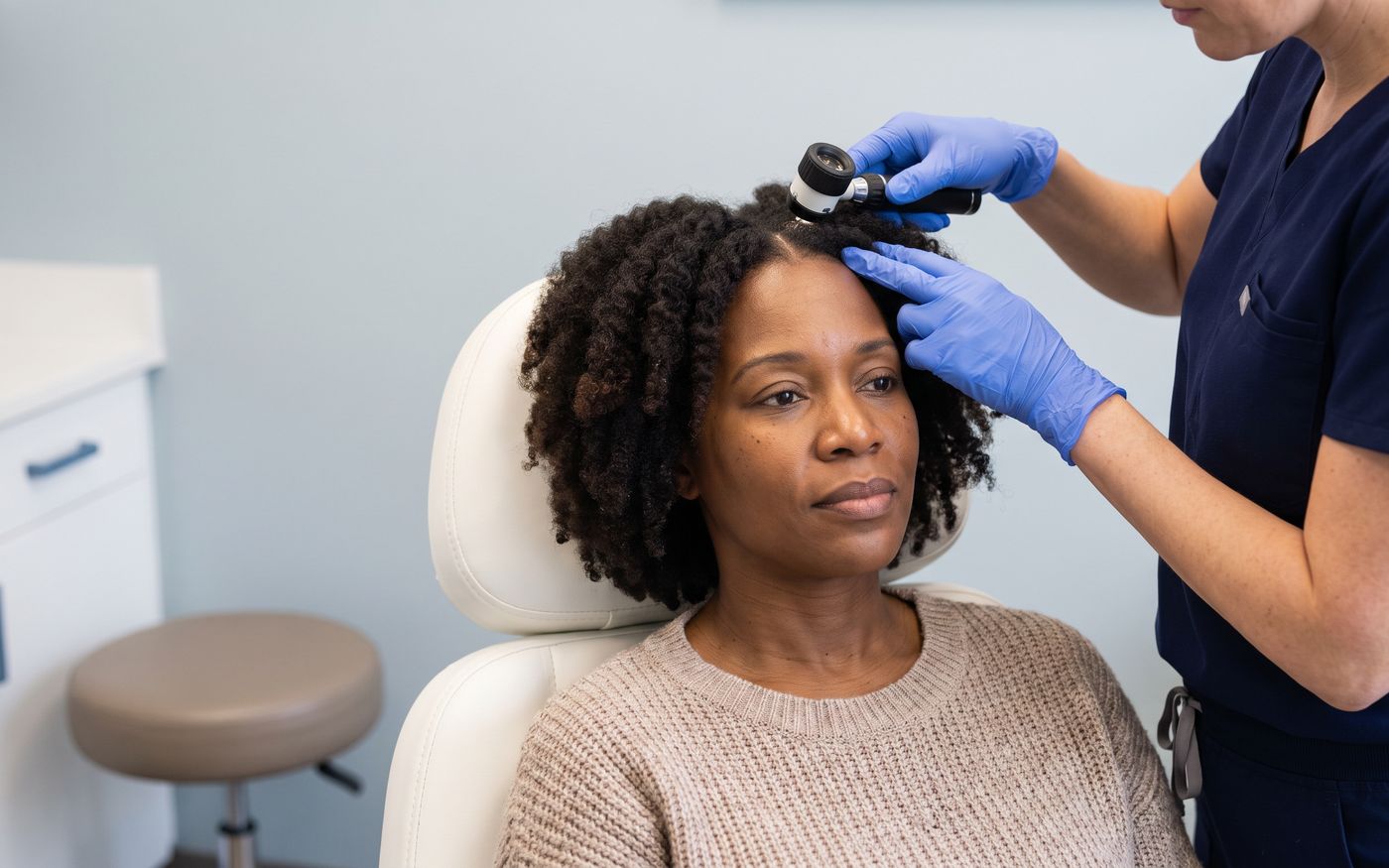
A proper diagnosis starts with your history — when thinning began, recent pregnancy, menopause, stress, diet and hairstyles — and an examination of the scalp under magnification. Blood tests often check thyroid function, iron stores, vitamin D and hormones. Identifying the cause shapes every next step, including whether a female hair transplant makes sense.
Preparing for your evaluation
An evaluation is faster and more useful when you arrive with the right information. A few notes made in advance can save a second visit.
blog-female-hair-loss-evaluation.jpg · 16:9
Write down or bring
- When you first noticed thinning, and whether it came on gradually or suddenly
- Recent life events: pregnancy, starting or stopping hormonal contraception, menopause, surgery, illness or rapid weight loss
- Every medication and supplement you take, including biotin, which can interfere with some laboratory tests
- Any recent blood work
- How you usually wear your hair, and whether you use extensions, weaves or tight styles
- Family history of thinning in women as well as men
Photos
For HAIROCKET's free photo analysis, send four photos — front, top, crown and sides — in good light. If your thinning is at the part, take the top photo with your hair parted where you normally wear it, so the width of the part is visible. You'll receive a written plan and all-inclusive quote within 24 hours; start on our contact page.
Timing
If you are recently postpartum or in a phase of heavy shedding, it is usually wiser to be evaluated now and make surgical decisions later, once the shedding has settled and the true pattern is clear.
Who is a good candidate for a female hair transplant?
- A high or uneven hairline you'd like lowered
- Thinning at the temples or front with a stable pattern
- Traction alopecia that has stopped progressing
- A widening part with a dense, stable donor area
- Scars from previous surgery or injury
Women with diffuse thinning across the whole scalp — including the donor area — are usually better served by medical treatment.
Why the donor area matters more for women
In men, hair on the back and sides of the head is usually resistant to pattern loss, which is what makes it a reliable donor supply. In women, that assumption has to be checked rather than taken for granted.
blog-female-hair-part-line-top-view.jpg · 16:9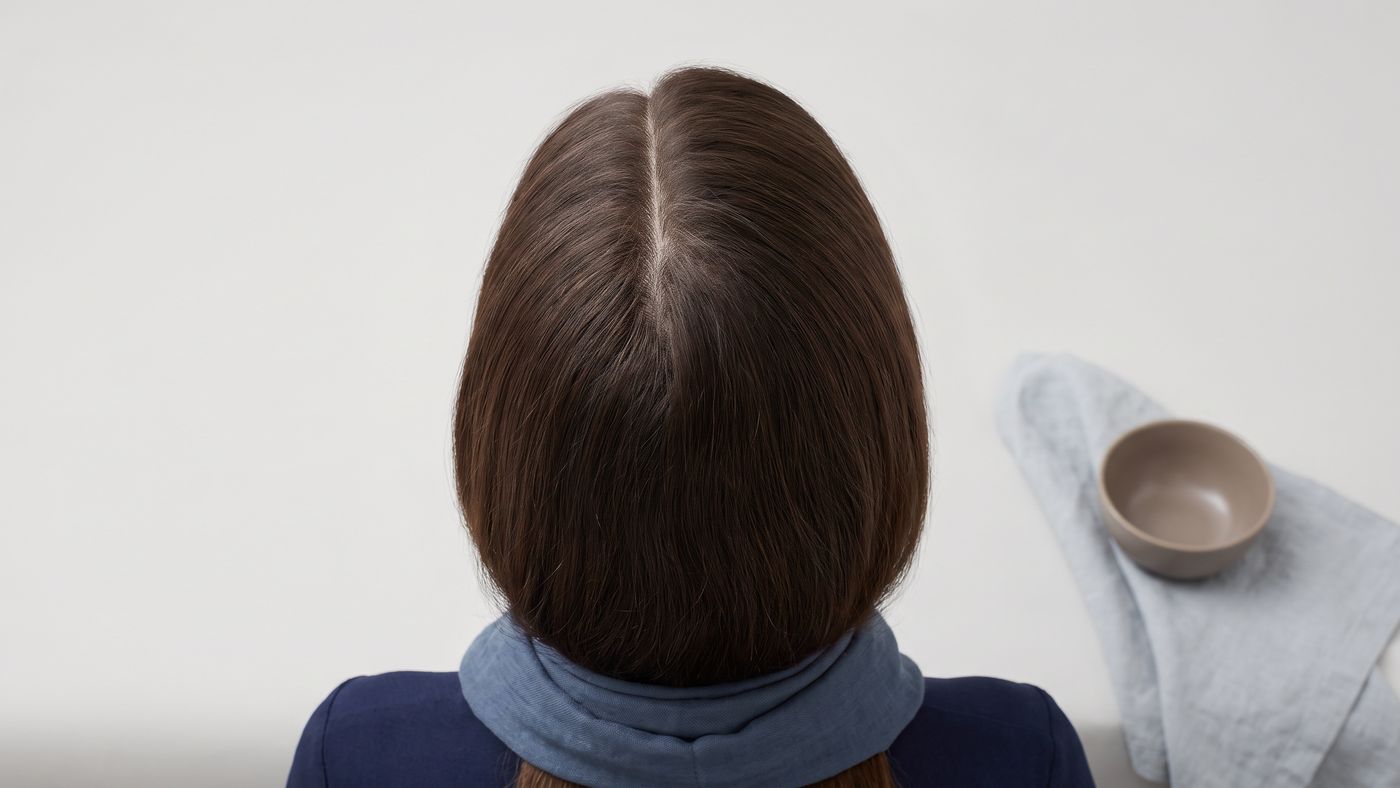
Diffuse thinning can reach the donor area
Some women have thinning that extends to the back and sides. Hair taken from a thinning donor area may not last, and removing it can make the back look thinner too. When the donor zone is affected, medical treatment usually comes first.
What the surgeon examines
- Hair density in the donor area, usually assessed under magnification
- Miniaturization — the share of fine, thinner hairs in a given zone
- Hair thickness, color and curl, which change how much coverage each graft gives
- Scalp flexibility and any scarring from earlier procedures
Why this shapes the plan
A female plan is usually about targeted density rather than maximum coverage. Placing grafts among existing hair also takes care, because packing grafts too tightly next to native hairs can add to temporary shedding. For how graft numbers are estimated, see how many grafts do I need.
What the procedure looks like
Most female hair transplants are unshaven: small donor strips hidden under longer hair, and grafts placed between existing hairs. Sessions typically range from 1,000 to 2,500 grafts and take five to eight hours under local anesthesia. Most women return to normal routines within days, with growth following the usual 12-month timeline.
Hairline lowering: grafts vs surgery
A high forehead can be lowered surgically (removing a strip of forehead skin) or with grafts. Graft-based hairline lowering avoids a scar at the front and allows a softer, irregular hairline, though it may take more than one session for large changes.
Three illustrative scenarios
These examples are illustrative, not real patients. They show how the same question — can a transplant help? — gets different answers.
Example 1: stable traction loss at the temples
A 34-year-old wore tight braids for years. Since switching to looser styles two years ago, her thin temples haven't changed, and her donor area is dense. She is a typical candidate for a modest unshaven session to rebuild the temples, with advice to keep her styles loose afterward.
Example 2: a widening part after menopause
A 52-year-old notices her part widening and her ponytail feeling thinner; under magnification, the sides and back are thinner too. The first step is diagnosis and medical therapy, often alongside PRP. A transplant is reconsidered only if the thinning stabilizes and a localized area remains with enough donor hair.
Example 3: a high forehead since adolescence
A 29-year-old has always had a high hairline, with no ongoing loss, normal blood work and a strong donor area. Graft-based hairline lowering can bring the hairline forward with a soft, irregular edge; a large change may take two sessions.
In each case, the decision rests on diagnosis, stability and donor quality. If you're weighing your own situation, read am I a good candidate for a hair transplant.
Combining treatments
For many women, the best results come from combining a transplant with ongoing medical therapy or PRP to protect native hair. Your surgeon will build a plan that addresses both the area you want to restore and the hair you want to keep.
Mistakes to avoid
Most disappointing outcomes in female hair restoration trace back to decisions made before or right after surgery.
- Booking surgery during active shedding — for example, in the months after childbirth or a major illness — before the cause is clear.
- Skipping blood tests and missing a thyroid or iron problem that will keep causing loss.
- Choosing a plan built around the largest possible graft number instead of your donor area's long-term limits.
- Stopping medical therapy after surgery, which leaves the native hair around the grafts unprotected.
- Returning to tight ponytails, braids, weaves or clip-in extensions over the grafts before your surgeon clears it.
- Coloring, chemical straightening or perming too soon; hair dye is usually fine from around week six, but ask about stronger chemical treatments.
- Judging the result before month twelve.
Recovery for women follows the same stages as for men. See the hair transplant recovery timeline, and learn more about our female hair transplant approach.
Frequently asked questions
Can women get hair transplants?
Yes — women with localized, stable loss and a good donor area are often good candidates.
Do women need to shave for a hair transplant?
Usually not; most female procedures are unshaven.
What is hairline lowering?
A procedure that moves the hairline forward with grafts to reduce a high forehead.
Does PRP work for women?
PRP helps many women with early thinning; results vary.
Is a female hair transplant permanent?
Yes — transplanted follicles keep growing for life, though native hair may still change.
How long does recovery take for women?
Most women return to normal routines within 2–4 days.
Can a hair transplant help thinning at the part line?
Yes, if the cause of thinning has been diagnosed and the donor area is stable. Grafts can add density along the part, usually without shaving, while medical therapy protects the hair around them.

HAIROCKET editorial team
Written in South Florida from the questions patients ask most in consultations, and updated when techniques, prices or guidelines change. Read our editorial policy.