

Short on time? Summarize with AI
Open this article in your favorite AI assistant for an instant summary.
In this article
- The short answer: different jobs
- What actually happens during each treatment
- When PRP makes sense
- When a hair transplant makes sense
- The grey zone: when either could apply
- PRP vs hair transplant at a glance
- Which option usually fits your pattern
- Why many patients combine them
- What a combined plan looks like over a year
- Comparing cost over time
- Mistakes to avoid when choosing
- How to decide
The short answer: different jobs
PRP (platelet-rich plasma) is a treatment made from your own blood. A small sample is spun to concentrate platelets, which are then injected into the scalp. The aim is to support existing follicles that are miniaturizing — thinning, but still alive.
A hair transplant is surgery. Follicles are taken from the donor area at the back and sides of the head, where hair is genetically resistant to loss, and implanted where hair is missing. Those follicles keep that resistance, so the result is permanent.
In one sentence: PRP tries to keep the hair you have; a transplant gives you back hair you have lost.
What actually happens during each treatment
Knowing what each appointment involves makes the PRP vs hair transplant choice less abstract. One is a short office visit you repeat; the other is a single, longer day followed by a recovery period.
blog-prp-centrifuge-preparation.jpg · 16:9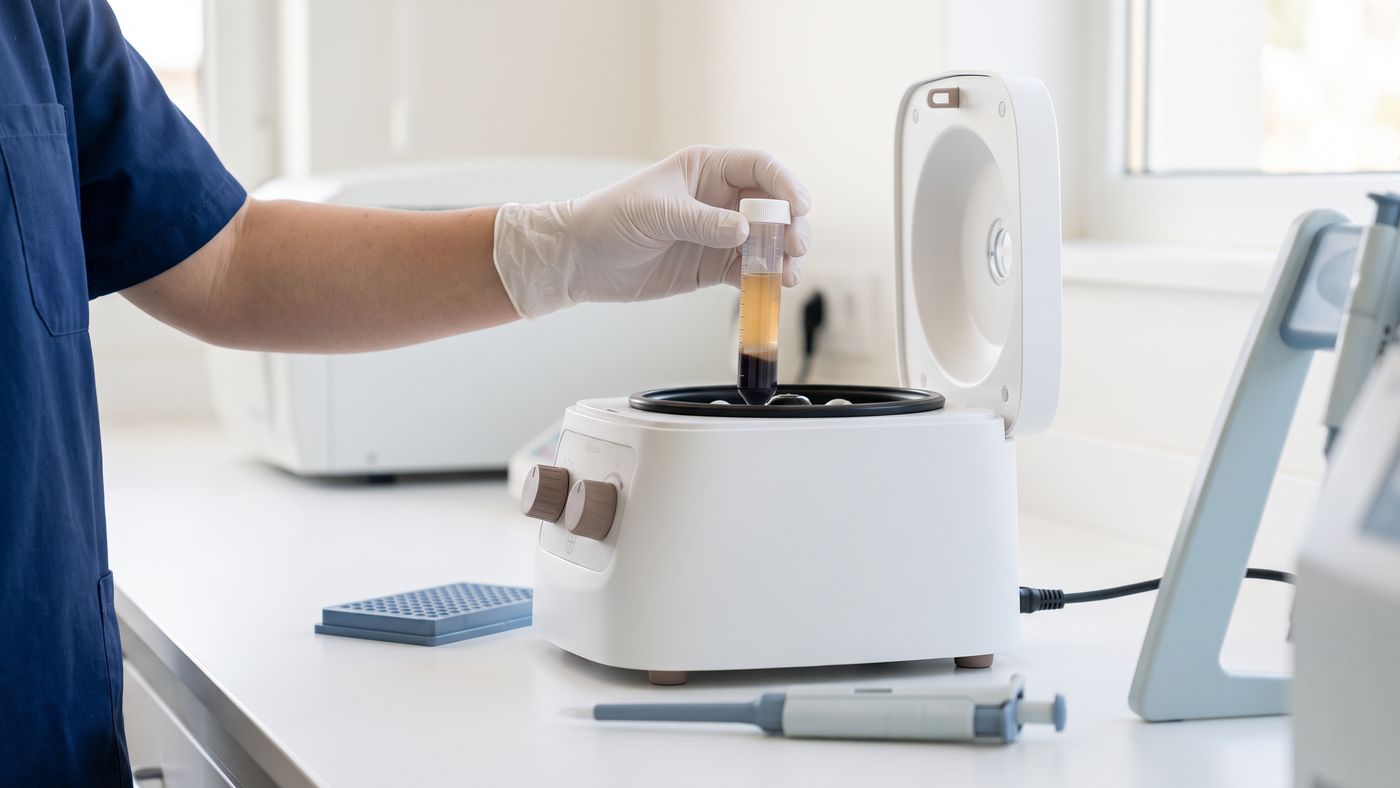
A PRP session, step by step
- A small blood sample is drawn from your arm, much like a routine lab test
- The sample is spun in a centrifuge to separate a platelet-rich layer from the red cells
- The scalp is cleaned, and the areas to treat are marked along the thinning zones
- The plasma is injected in small amounts across those zones; numbing options vary by clinic
- You leave the same day and can usually wash your hair the next day, following your clinic's instructions
The whole visit typically takes about an hour. Mild tenderness or a tight feeling in the scalp for a day or two is common. Because the effect builds over a series, one session on its own tells you very little.
A transplant day, step by step
- Your surgeon confirms the hairline design and the graft plan with you before anything starts
- The donor and recipient areas are numbed with local anesthesia
- Follicular units are extracted one by one from the donor area
- Recipient channels are opened at the planned angle and direction — with Sapphire FUE, using ultra-fine sapphire blades
- Grafts are placed into the channels, and you go home the same day with written aftercare instructions
A transplant usually takes most of a day, and you return for a first wash and check the next day. It is a larger commitment up front, but it is normally done once for a given area.
When PRP makes sense
- Early thinning, especially along the part line or crown, with no fully bald areas yet
- Women with diffuse thinning who are not good surgical candidates
- After a transplant, to support native hair around the grafts
- Patients who want to delay surgery while they decide
Research on PRP for pattern hair loss is encouraging but mixed: many studies report improved hair density, others show smaller effects, and protocols vary widely. Results are individual, usually need a series of three to four sessions and regular maintenance, and fade if treatment stops. A good clinic tells you this before you start.
PRP does not create new follicles. If an area is shiny and smooth, PRP alone will not bring hair back there.
When a hair transplant makes sense
- A receding hairline or temples that have been stable for a while
- A bald or very thin crown
- Enough donor hair to cover the area you want to restore
- Realistic expectations about density — see how many grafts you need
Techniques such as Sapphire FUE place each graft individually, so the new hairline looks natural. Most people return to desk work in three to five days, and the final result appears around month twelve.
The grey zone: when either could apply
Clear-cut cases are easy. The harder decisions sit in between, where some areas are thinning and others are already bare. These illustrative examples show how a surgeon typically reasons through them — they are not real patients.
Example 1: early thinning at 29
A 29-year-old notices a wider part and a see-through crown under bright light, but no smooth, bald skin. His hair loss is recent and still changing. Here, surgery would be premature: the pattern is not settled, and grafts placed now could end up isolated as native hair keeps thinning. A reasonable plan is medical therapy and PRP, with photos every few months and a reassessment after about a year.
Example 2: stable recession at 41
A 41-year-old has receded temples that have looked the same for several years, with dense hair behind them and a strong donor area. PRP will not rebuild temple points that are already gone. A transplant is the direct answer, and PRP may be offered afterwards to support the native hair just behind the new hairline.
Example 3: bald front, thinning crown at 47
A 47-year-old has a bald frontal area and a crown that is thinning but still covered. A common approach is to restore the front surgically, where the visual impact is greatest, and treat the crown medically for now. That protects donor reserves in case the crown needs grafts later — see crown restoration.
The deciding factor is rarely age alone. It is how much of the area is thinning versus gone, how stable the pattern is and how much donor hair you have.
PRP vs hair transplant at a glance
| Topic | PRP therapy | Hair transplant |
|---|---|---|
| What it does | Supports existing, thinning hair | Moves permanent follicles into bald areas |
| Sessions | Series of 3–4, then maintenance | Usually one procedure |
| Downtime | None — same day | 3–5 days for desk work |
| Results last | Months; needs maintenance | Lifelong for transplanted hair |
| Typical cost at HAIROCKET | From $750 per session | Packages $5,500–$8,000 |
Which option usually fits your pattern
The at-a-glance table above compares the treatments. This one starts from what you see in the mirror. It is a general guide only; your surgeon's assessment of your photos decides the plan.
| What you see | Usually suggests | Why |
|---|---|---|
| Wider part, hair still covers the scalp | PRP and/or medical therapy first | Follicles are thinning but still present |
| Receded temples, stable for years | Hair transplant | Lost follicles cannot be restored by injections |
| Thin, see-through crown, still some coverage | Medical therapy, PRP; transplant later if needed | Crown loss often keeps progressing; donor reserves matter |
| Smooth, shiny bald area | Hair transplant | No active follicles left to support |
| Diffuse thinning all over (common in women) | Medical evaluation, PRP; surgery only in selected cases | A stable donor area is needed for surgery — see female hair transplant |
| Bald zone plus thinning around it | Both: transplant the bald zone, support the rest | Protects native hair next to the grafts |
Two things can override this table. If your donor area is weak, even a bald zone may be better treated conservatively. And if the cause of your hair loss is unclear — sudden shedding, patchy spots, scalp symptoms — a medical workup comes before either treatment.
Why many patients combine them
Hair loss usually keeps progressing around a transplanted area. That is why many surgeons recommend protecting native hair with medical therapy or PRP alongside surgery. At HAIROCKET, the Signature package includes a 3-month PRP program and Elite a full year (12 sessions) to support the recovery phase; single sessions are also available.
Read more on our PRP therapy page, or see the full recovery timeline.
What a combined plan looks like over a year
When a transplant and PRP are combined, the transplant is the anchor and PRP is scheduled around it. Exact timing is set by your surgeon, but the overall shape is usually similar.
blog-prp-session-treatment-chair.jpg · 16:9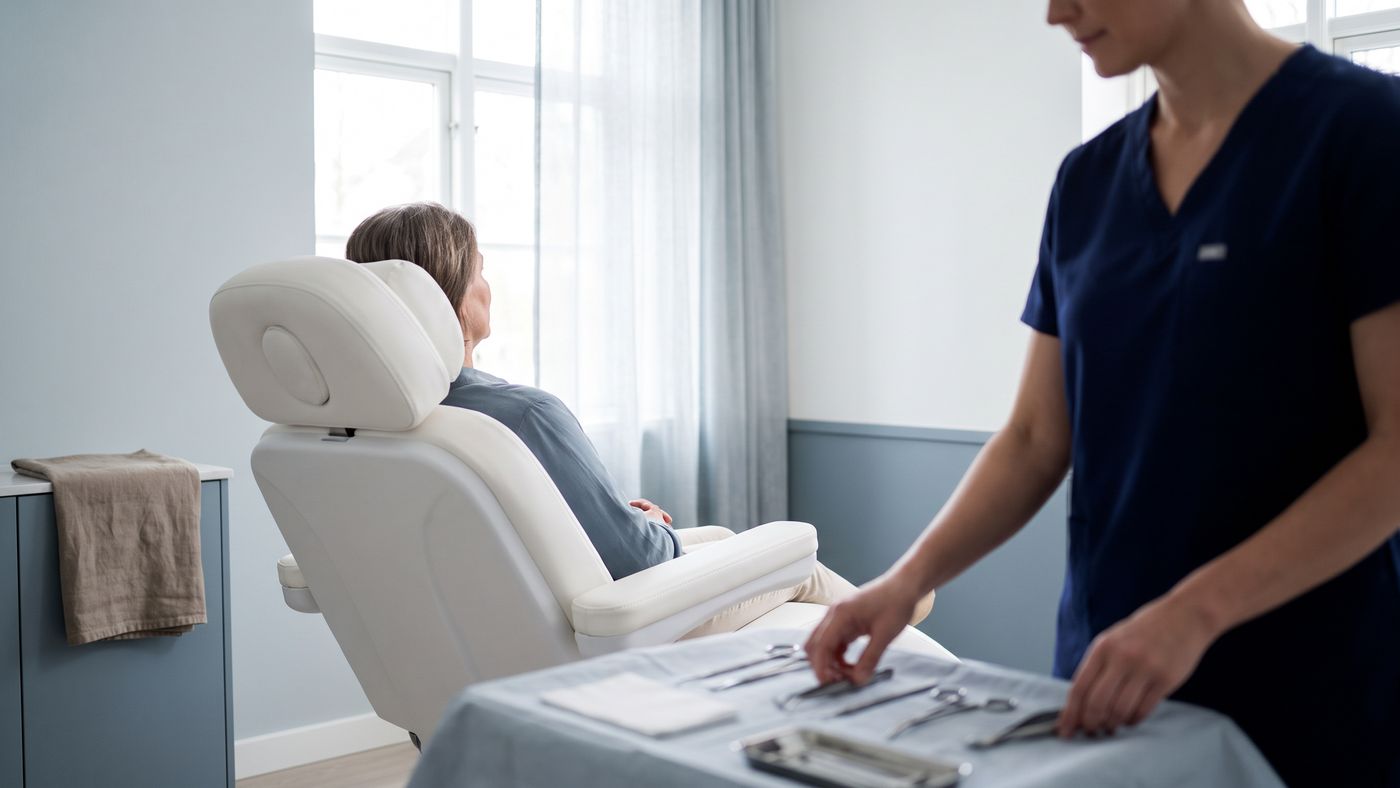
| Phase | Transplant side | PRP / supportive side |
|---|---|---|
| Before surgery | Photo analysis, hairline design, graft plan | Surgeon decides whether any pre-op sessions are useful |
| Procedure day and first days | Grafts placed; first wash and check the next day | Sessions start only when your surgeon clears the scalp |
| Weeks 2–8 | Transplanted hairs shed — an expected stage | Aims to support native hair that may be stressed by surgery |
| Months 3–6 | New growth starts; follow-up at month 3 | Sessions continue per plan |
| Months 6–12 | Density builds; follow-ups at months 6, 9 and 12 | Maintenance decided from your progress photos |
At HAIROCKET, the Signature package includes a 3-month PRP treatment package and the Elite package a 1-year PRP package of 12 sessions; single sessions are $750 each. Compare what each includes on the packages page.
One practical point: PRP does not speed up the transplant timeline. Growth still starts around months three to four and matures around month twelve. Its role in a combined plan is to support the hair around the grafts, not to make grafts grow faster.
Comparing cost over time
Comparing one PRP session with a transplant package is misleading, because the two are paid for differently. PRP is an ongoing cost: an initial series of three to four sessions, then maintenance for as long as you want to keep the effect. A transplant is mostly a one-time cost, although many patients also use medical therapy afterwards to protect the hair around the grafts.
If you are young and your hair loss is still progressing, starting with PRP or medical therapy and reassessing in a year is often sensible. If an area is already bald and your pattern has been stable, years of PRP will not restore it — a transplant is the more direct answer. Your surgeon should explain both paths with written prices, then let you choose.
Mistakes to avoid when choosing
- Using PRP to postpone an inevitable transplant for years. If an area is already bald, repeated sessions there spend money without restoring it.
- Rushing into surgery while loss is still fast. A young patient with rapidly changing hair can end up with a hairline that no longer matches the hair behind it.
- Judging PRP after one session. The effect, where there is one, builds over a series; assess it with consistent photos after the initial course.
- Ignoring the donor area. Whether a transplant is possible, and how much it can cover, depends on donor supply — check with the graft calculator for a first estimate.
- Expecting a transplant to stop hair loss. Transplanted hair is permanent, but native hair around it can keep thinning, which is why long-term planning matters.
- Choosing on price per visit alone. Compare the total over several years, including maintenance, not the cost of a single appointment.
If you are unsure where you stand in the PRP vs hair transplant decision, that is exactly what a consultation is for. Bring your questions and your photos, and ask the surgeon to explain why one path fits you better than the other.
How to decide
The quickest way is a photo analysis: send pictures of your front, top, crown and sides. A Turkish-trained, Florida-licensed surgeon looks at how much hair is thinning versus gone, checks your donor area and tells you honestly whether PRP, a transplant or both make sense — with a written price.
Frequently asked questions
Can PRP replace a hair transplant?
No. PRP can support thinning hair, but it cannot regrow hair where follicles are gone. Bald areas need a transplant.
Is PRP worth it before a hair transplant?
It can be, if you have thinning native hair around the area to be treated. Your surgeon decides case by case.
How long do PRP results last?
Usually several months; most patients need maintenance sessions once or twice a year. Results vary by person.
Does PRP help after a hair transplant?
It is commonly used to support the recovery phase and the native hair around the grafts.
Which is cheaper, PRP or a hair transplant?
One PRP session costs less, but PRP needs repeated sessions for as long as you want the effect; a transplant is usually a one-time cost.

HAIROCKET editorial team
Written in South Florida from the questions patients ask most in consultations, and updated when techniques, prices or guidelines change. Read our editorial policy.