
Short on time? Summarize with AI
Open this article in your favorite AI assistant for an instant summary.
In this article
- American demand for Turkish technique
- Growing concerns about travel
- What it takes to operate in the U.S.
- How foreign-trained physicians become licensed, in general terms
- What it means for patients
- Who does what on procedure day
- How to choose
- Flying to Turkey vs a Turkish-trained surgeon at home
- How to verify a Turkish-trained surgeon in the U.S.
- Red flags when a clinic markets "Turkish" expertise
- How Turkey became the benchmark
- What Turkish training brings to American patients
- What doesn't change when a surgeon crosses borders
- American standards, explained
- What this means for the future
- An illustrative decision: Istanbul or Florida?
- HAIROCKET's approach
American demand for Turkish technique
Social media made Turkish hair transplant results famous: dense hairlines, large single sessions and all-inclusive prices. Many Americans who couldn't — or didn't want to — travel began asking whether they could get the same approach at home.
Growing concerns about travel
At the same time, reports of unlicensed clinics, difficult flights after surgery and limited follow-up made many patients hesitate. Read more in Is a hair transplant in Turkey safe?
What it takes to operate in the U.S.
A surgeon who trained in Turkey must hold a medical license in the state where they operate. In Florida, that means licensure through the Florida Board of Medicine, which you can verify online. Clinics must also follow U.S. standards for anesthesia, sterility, consent and privacy.
How foreign-trained physicians become licensed, in general terms
Licensing rules are set state by state and change over time, so treat this as a general outline rather than a legal checklist. The overall shape, though, is consistent: a physician trained abroad has to meet U.S. requirements before treating patients here.
- Education verification: the physician's medical education and diploma are checked through recognized credentialing processes.
- Examinations: internationally trained physicians generally must pass U.S. medical licensing examinations.
- Postgraduate training: each state sets its own requirements for supervised training, and some states have added alternative pathways for experienced internationally trained physicians.
- State board review: the medical board reviews the application, background and credentials before issuing a license.
- Ongoing obligations: license renewal, continuing education and compliance with state rules last for as long as the physician practices.
For patients, the practical point is simple: a license is issued by a specific state, it is public, and it applies in that state. A surgeon licensed in Florida is not automatically licensed to operate in another state, so check the license for the state where your procedure takes place.
What it means for patients
- Turkish techniques — Sapphire FUE, unshaven FUE, PRP — without international travel
- A surgeon you can see in person before and after surgery
- U.S. legal protections and privacy standards
- All-inclusive package pricing in many practices
At HAIROCKET, that's exactly our model: Turkish hair transplant expertise, now in America.
Who does what on procedure day
Hair transplantation is a team procedure, and trained technicians commonly assist. The useful question is not whether a team is involved, but which decisions and surgical steps the licensed surgeon performs personally.
blog-turkish-surgeon-procedure-team.jpg · 16:9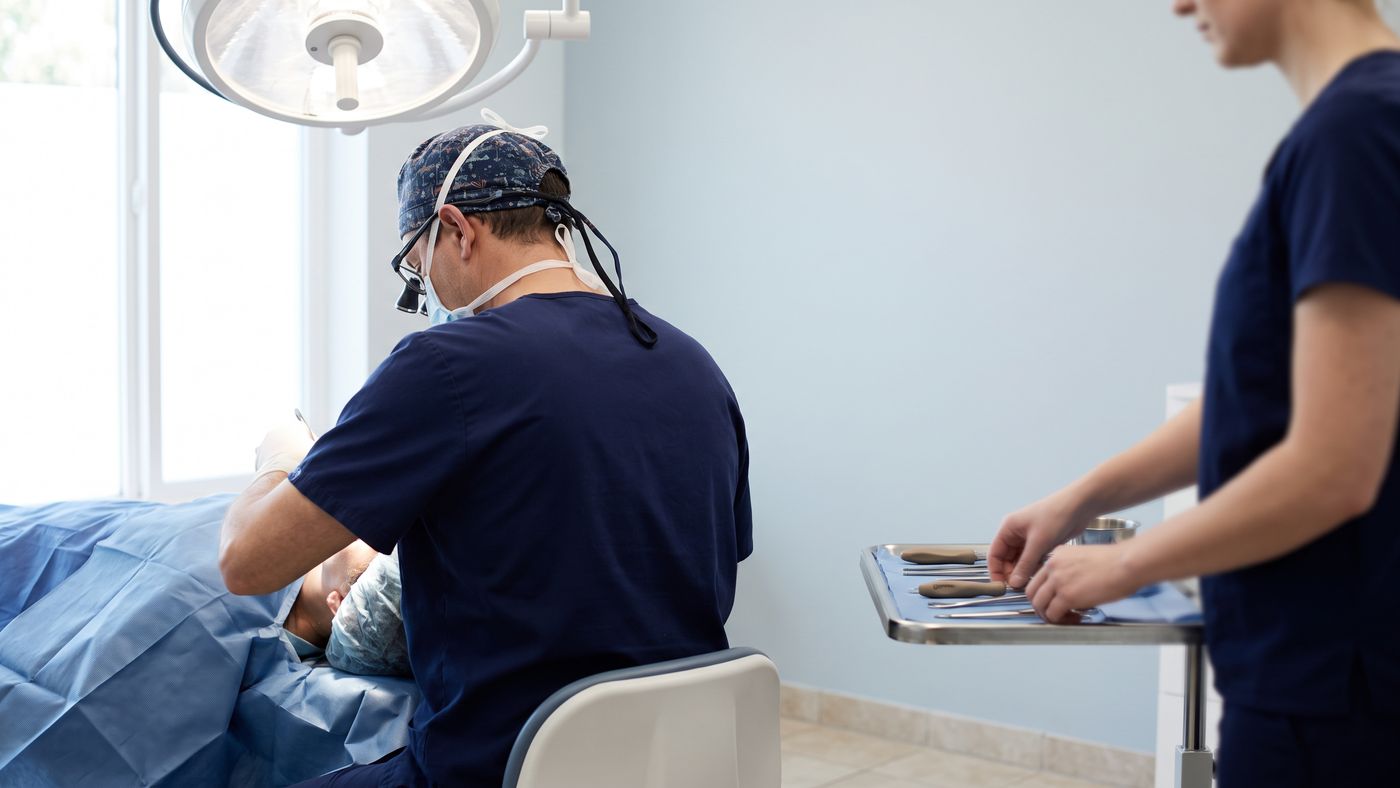
| Step | What happens | Question to ask |
|---|---|---|
| Planning and hairline design | Graft count, density targets and the hairline shape are decided and drawn | Who designs my hairline, and do I approve it before we start? |
| Local anesthesia | The donor and recipient areas are numbed | Who gives the anesthesia, and how am I monitored? |
| Extraction | Individual follicular units are removed from the donor area | Who performs the extractions, and how is donor density protected? |
| Recipient channels | Tiny openings are made — with Sapphire FUE, using sapphire blades — that set each hair's angle, direction and density | Who opens the channels? |
| Graft handling | Grafts are sorted, counted and kept hydrated outside the body | How are grafts stored and counted? |
| Placement | Grafts are inserted into the channels | Who places the grafts, and who supervises? |
A clear, specific answer to each question is a good sign; a vague one is worth following up. Channel opening is where much of a natural look is decided — read more about Sapphire FUE.
How to choose
When you compare Turkish hair transplant surgeons in the U.S., verify the license, ask where the surgeon trained and how many procedures they've performed, review unedited results and get a written plan. Meet our surgeons.
Flying to Turkey vs a Turkish-trained surgeon at home
For many Americans, the real choice is between two versions of the same technique. This comparison focuses on the practical differences.
blog-turkish-surgeons-airport-travel.jpg · 16:9
| Factor | Procedure in Turkey | Turkish-trained surgeon in the U.S. |
|---|---|---|
| Travel | Long international flights, including the flight home soon after surgery | A domestic flight or a drive; most patients recover at home |
| Time near the clinic | Usually several days abroad plus travel days | Typically procedure day plus the next-day wash and check |
| Follow-up | Mostly remote once you're home | In-person or video checkpoints at months 3, 6, 9 and 12 |
| Licensing and recourse | Turkish regulation; legal remedies abroad can be harder to pursue | A U.S. state license, U.S. consumer protections and privacy rules |
| Communication | Often through coordinators or interpreters | Consultation and consent in English; our team also speaks Spanish |
| Price | Lower headline price; add flights, hotel and time off | U.S. pricing often runs $4–$8 per graft; HAIROCKET uses fixed packages starting at $5,500 |
Neither option is automatically right — the table shows trade-offs. For a deeper look, see Turkey vs USA and our cost guide.
How to verify a Turkish-trained surgeon in the U.S.
Start with the state license: in Florida, search the Department of Health license lookup by the surgeon's name. Then ask where they trained, how many hair transplant procedures they have performed and which steps they perform personally. Finally, review unedited before and after photos and read reviews that mention the surgeon by name. A reputable practice will make all of this easy to check — and will never discourage you from doing so.
Red flags when a clinic markets "Turkish" expertise
"Turkish technique" has become a marketing phrase. When you compare Turkish hair transplant surgeons, these signs suggest you should ask harder questions — or keep looking.
- The clinic won't name the surgeon who will operate, or the name changes between consultation and surgery day.
- No license information is offered, or the surgeon doesn't appear in the state's public license lookup.
- A graft number is promised before anyone has reviewed photos of your donor area.
- "Unlimited grafts" offers with no written plan explaining how many grafts you need, and why.
- Discounts that expire within hours, or pressure to pay a deposit on the first call.
- Before-and-after photos taken in different lighting or angles, or with hair styled over the treated area.
- An aftercare plan that is vague or ends when you leave the building.
- Answers to "who does what" that change depending on whom you ask.
A careful practice welcomes these questions and answers them in writing.
How Turkey became the benchmark
Over roughly fifteen years, Turkey went from one of many hair transplant markets to the global benchmark. High patient volumes, dedicated hair clinics and constant technique refinement produced surgeons with unusually deep experience — and a reputation that spread through social media and word of mouth.
What Turkish training brings to American patients
- Experience with very high procedure volumes
- Comfort planning large single sessions safely
- Fluency with Sapphire FUE and unshaven techniques
- Exposure to every hair type, including afro-textured and curly hair
- A culture of all-inclusive, package pricing
Combined with U.S. licensure, it gives patients a familiar Turkish approach inside an American medical framework.
What doesn't change when a surgeon crosses borders
Moving a surgeon from Istanbul to Florida changes the setting, not the biology. A few things stay the same wherever the procedure happens, and any clinic that suggests otherwise deserves a closer look.
- The donor supply is finite. Each follicle can be moved only once, so long-term planning matters more than a single very dense session.
- The growth timeline is fixed. Shedding in the first months, new growth from months 3–4 and final results around month 12.
- Graft handling affects survival. Grafts need to stay hydrated and be handled gently between extraction and placement.
- Native hair can keep thinning. A transplant doesn't stop pattern loss, so medical therapy or PRP is often part of the plan.
What does change is how easily you can see your surgeon again, and which rules protect you if something goes wrong. For what the months after surgery look like, see the recovery timeline.
American standards, explained
In Florida, surgeons must hold a license from the Florida Board of Medicine, advertising must not be misleading, patient records are protected under HIPAA and informed consent is required. These rules don't change how a Turkish-trained surgeon places a graft — they change the accountability around the procedure.
What this means for the future
As more Turkish-trained surgeons obtain U.S. licenses, American patients will increasingly be able to choose Turkish technique without international travel — and without giving up in-person follow-up. The most important question stays the same: who, exactly, performs your procedure — and can you verify their credentials?
An illustrative decision: Istanbul or Florida?
Example: a 41-year-old in Atlanta with Norwood 4 hair loss is weighing an Istanbul package against a Turkish-trained surgeon in South Florida. This is an illustration, not a real patient.
What they compare
The Istanbul package has the lower headline price. Once they add flights, a hotel, extra vacation days and the possibility of a second trip if something needs attention, the gap narrows. Florida is a short flight or a long day's drive away, and the next-day wash and check happens before they head home.
What tips the decision
- Can they meet the surgeon in person and verify a U.S. license?
- Who reviews their growth at months 3, 6, 9 and 12?
- If something worries them at month two, whom do they contact, and how quickly?
- Does the plan protect their donor area for a possible future session?
For this person, in-person accountability outweighs the price difference. Someone with more flexibility and a tighter budget may reasonably decide otherwise. To see a written plan and quote for your own case, start with a free photo analysis on our contact page.
HAIROCKET's approach
HAIROCKET was built on this idea: Turkish hair transplant expertise, now in America. Our surgeons trained in high-volume Turkish clinics, hold Florida medical licenses and operate in South Florida, with patients from across Florida and neighboring states.
Frequently asked questions
Can Turkish doctors perform hair transplants in the USA?
Yes, if they hold a medical license in the state where they operate.
Is a Turkish hair transplant in the USA the same as in Turkey?
The techniques are the same; the setting, licensure and follow-up are American.
How do I verify a surgeon's license in Florida?
Use the Florida Department of Health's online license lookup.
Is it more expensive than Turkey?
The procedure costs more, but the gap narrows once travel and time off are included.
Do Turkish-trained surgeons speak English?
Yes — consultations, consent and aftercare are in English, and our team also speaks Spanish.
Where do your surgeons practice?
At our clinic in Tamarac, Florida (7710 NW 71st Ct, Tamarac, FL 33321), near Fort Lauderdale — about 30 minutes from Fort Lauderdale–Hollywood International Airport.

HAIROCKET editorial team
Written in South Florida from the questions patients ask most in consultations, and updated when techniques, prices or guidelines change. Read our editorial policy.