

Short on time? Summarize with AI
Open this article in your favorite AI assistant for an instant summary.
In this article
- The short answer
- How FUT (strip surgery) works
- How FUE works
- The donor area as a lifetime budget
- FUE vs FUT at a glance
- Results and graft numbers
- Recovery and comfort
- Donor-area aftercare compared
- Who might be better suited to FUT?
- Illustrative scenarios
- Does FUT cost less?
- Per-graft pricing, worked through
- How to decide
- Questions to ask, and mistakes to avoid
The short answer
Both methods move follicles from the back and sides of the head, where hair is resistant to pattern loss, to the thinning areas. Once implanted, a follicle does not know how it was harvested. The difference is in the donor area: how the grafts come out, how the scalp heals and how the back of your head looks with short hair afterwards.
How FUT (strip surgery) works
In follicular unit transplantation, the surgeon removes a thin strip of skin from the donor area under local anesthesia and closes the wound with stitches or staples. Technicians then divide the strip into individual follicular units under microscopes, and the grafts are implanted into the recipient area.
- One linear scar, usually hidden by hair of moderate length
- Stitches or staples come out after roughly 10 to 14 days
- The back of the head does not need to be shaved
- A feeling of tightness in the donor area is common for a few weeks
How FUE works
In follicular unit extraction, each graft is removed individually with a small circular punch, typically under a millimeter wide. The tiny openings heal on their own within days, without stitches. Techniques such as Sapphire FUE and unshaven FUE are both FUE methods — they differ in how recipient sites are prepared and how much donor hair is trimmed.
- Small dot scars spread across the donor area, usually invisible with a short haircut
- No stitches and generally less donor discomfort
- The donor area is usually trimmed short; unshaven FUE is an option for smaller sessions
- Grafts are taken evenly across a wider zone to avoid visible thinning
The donor area as a lifetime budget
Whichever method is used, grafts should come from the safe donor zone: the band at the back and sides of the head where hair is least likely to thin with age. Harvesting outside it can move follicles that later fall out, or leave scars exposed if the surrounding hair thins.
blog-fue-fut-donor-zone-back-of-head.jpg · 16:9
How each method uses the zone
FUT takes a strip from the middle of the zone, where density is usually highest, and leaves the rest untouched. FUE samples follicles across the whole zone, leaving hair between each extraction so that the area still looks full. Because the two draw on the same supply in different ways, a patient can sometimes have both over a lifetime.
The risk of overharvesting
The main long-term risk with FUE is taking too many grafts from one area, which can leave the donor area visibly thin or "moth-eaten". With FUT, the main risks are a widened scar and reduced scalp laxity for later strips. A careful surgeon plans the whole lifetime, not just the first session.
Ask your surgeon how many grafts they estimate your donor area can give in total, and how much of that the proposed session would use.
FUE vs FUT at a glance
| Topic | FUE | FUT (strip) |
|---|---|---|
| Harvesting | Follicles removed one by one | A strip of scalp removed and dissected |
| Donor scar | Many tiny dots | One fine linear scar |
| Short haircuts | Usually fine | The line may show with very short hair |
| Stitches | None | Removed after about 10–14 days |
| Donor recovery | Typically faster, less tight | Tightness for a few weeks |
| At HAIROCKET | Our standard (Sapphire FUE, unshaven) | Not offered (Sapphire FUE only) |
Results and graft numbers
Both methods can deliver natural hairlines and good density when the planning, handling and implantation are done well. What limits any transplant is the donor supply: the number of follicles you have and how many can be taken without thinning the donor area. FUT can harvest a large number of grafts in one session from a narrow band of scalp; FUE spreads extraction across a wider area. Some patients combine both over a lifetime to make the most of their donor hair.
To estimate how many grafts your pattern needs, see how many grafts you need.
Recovery and comfort
The recipient area heals the same way with both methods: small crusts for about ten days, shedding of transplanted hairs in the first weeks and new growth from month three or four. The donor area is where they differ. After FUE, most people return to desk work in three to five days. After FUT, the stitched area can feel tight and tender for longer, and strenuous exercise that stretches the scalp is usually postponed until the wound is strong. Read the full recovery timeline.
Donor-area aftercare compared
The recipient area is cared for the same way after both procedures. The donor area is where the daily routine differs, especially in the first two weeks. The table shows commonly advised aftercare; your surgeon's written instructions take precedence.
blog-fue-micro-punch-instrument.jpg · 16:9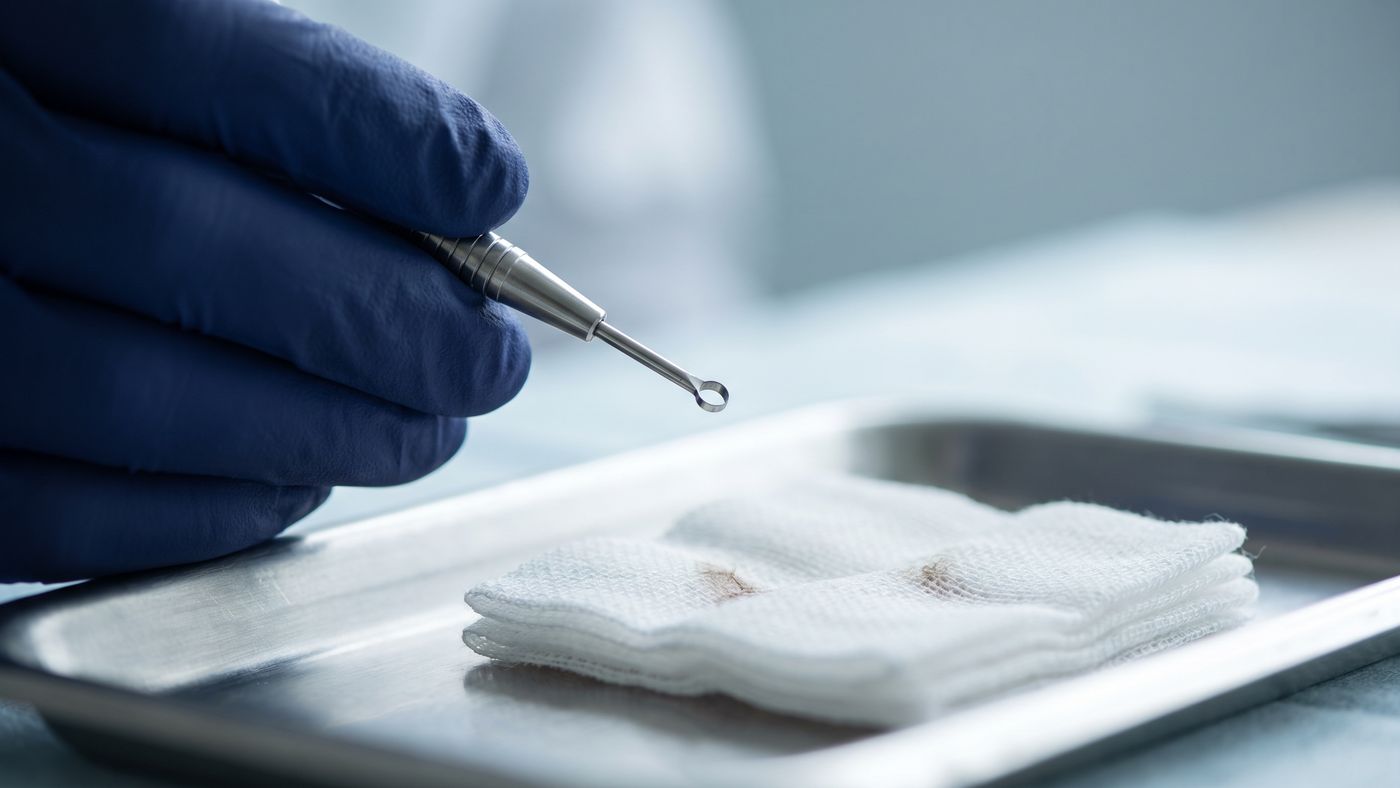
| Aftercare step | After FUE | After FUT |
|---|---|---|
| Dressing | Often a light dressing for the first night or two | A dressing over the stitched line, then care of the incision |
| Washing | Gentle washing as instructed from the first days | Gentle washing, taking care around stitches or staples |
| Sleeping | Slight tenderness on the back of the head | Tightness can make lying back uncomfortable at first |
| Follow-up visit | Routine check of healing | Stitch or staple removal after about 10–14 days |
| Neck and head movement | Normal movement within days | Bending the neck forward may feel tight for weeks |
| Haircut | Donor hair regrows over the dots within weeks | The line is usually covered once hair grows past a short length |
Numbness or tingling in the donor area can happen after either method and usually settles over the following weeks to months. Tell your care team if it does not improve.
Who might be better suited to FUT?
- Patients who need a very large session and always wear their hair longer at the back
- Patients with good scalp laxity and a donor area that has already been used for FUE
- Some repair cases, where the surgeon wants to keep dot scarring to a minimum
Most men who keep their hair short at the back, and most women, are better served by FUE. The right choice depends on your donor area, hairstyle and long-term plan — not on which method a clinic happens to offer.
Illustrative scenarios
These examples are illustrative, not real patients. They show how hairstyle, donor area and history steer the choice more than the method's name.
Example: 31, Norwood 3, short fade haircut
He wears the back of his hair very short and needs a moderate number of grafts for the hairline and temples. FUE is the natural fit: no linear scar that could show under a clipper cut, and a quick return to work.
Example: 55, Norwood 6, long hair, earlier FUE
He always wears his hair over the collar, has good scalp laxity, and previous FUE sessions have already thinned part of his donor area. Some surgeons would discuss a strip here, because it can yield grafts from a band that still has density while the scar stays hidden under his hairstyle.
Example: 40, old FUT scar, wants a short cut
Years ago he had strip surgery and now wants to wear his hair short, but the line shows. FUE can be used both to harvest new grafts and to place grafts into the scar to soften it, as long as the scar tissue has enough blood supply.
In every case the recommendation follows from the person, not the other way round.
Does FUT cost less?
In the U.S., clinics that price per graft often charge less for FUT than for FUE because harvesting is faster. At HAIROCKET, quotes are all-inclusive and written after a free photo analysis, so the method a surgeon recommends doesn't change what is included. See pricing and packages or the Florida cost guide.
Per-graft pricing, worked through
Per-graft pricing makes quotes look easy to compare, but the total depends on how many grafts are planned. Typical U.S. prices for FUE fall roughly between $4 and $8 per graft. The table shows how quickly that range spreads once you multiply it out.
| Grafts planned | At $4 per graft | At $8 per graft |
|---|---|---|
| 1,500 | $6,000 | $12,000 |
| 2,500 | $10,000 | $20,000 |
| 3,500 | $14,000 | $28,000 |
A lower FUT price per graft can still produce a similar total if more grafts are planned, and a per-graft quote can rise on the day if the surgeon decides more are needed. When comparing, ask whether the price is fixed, what happens if the graft count changes, and whether medication, follow-ups and aftercare are included.
HAIROCKET performs Sapphire FUE, and its packages are fixed-price: the price covers all the grafts the surgeon plans for your session. See the packages for what each one includes.
How to decide
Ask any surgeon to show you, on your own scalp, where grafts would come from, how many can be taken safely now and how much donor hair would remain for the future. A good surgeon explains both methods and recommends the one that fits you. You can start with a free photo analysis from a Turkish-trained, Florida-licensed surgeon.
Questions to ask, and mistakes to avoid
Whichever clinic you visit, these questions make it easier to compare advice on FUE vs FUT honestly.
- Which method do you recommend for me, and why not the other one?
- How many grafts can my donor area give in total, and how many would this session use?
- Where exactly would the grafts or strip come from, and what will the area look like with my usual haircut?
- Who does the extraction, graft handling and implantation, and who supervises?
- What would a second session look like if my hair loss continues?
Mistakes to avoid
- Choosing a method before knowing your donor capacity and long-term plan
- Assuming FUE is scar-free: it leaves small dot scars that can show with a very close shave
- Picking the lowest per-graft price without checking what the total includes
- Forgetting your hairstyle: a buzz cut and a long cut favor different methods
HAIROCKET's surgeons perform Sapphire FUE only. If your assessment suggests that strip surgery would serve you better, they will say so.
Frequently asked questions
Is FUE better than FUT?
Neither is better for everyone. FUE avoids a linear scar and usually heals faster; FUT can harvest many grafts in one session for patients who wear their hair longer.
Does FUT leave a scar?
Yes, one fine linear scar across the back of the head. With moderate hair length it is usually hidden, but it can show with very short haircuts.
Does FUE leave scars?
Yes, many tiny dot scars. They are usually invisible with a short haircut but can show if the head is shaved very closely.
Is FUT more painful than FUE?
Both are done under local anesthesia. After surgery, the stitched donor area of FUT typically feels tighter and more tender for longer.
Can I have FUE after FUT?
Yes. Many patients combine the two over time, and FUE can also be used to place grafts into an FUT scar.

HAIROCKET editorial team
Written in South Florida from the questions patients ask most in consultations, and updated when techniques, prices or guidelines change. Read our editorial policy.